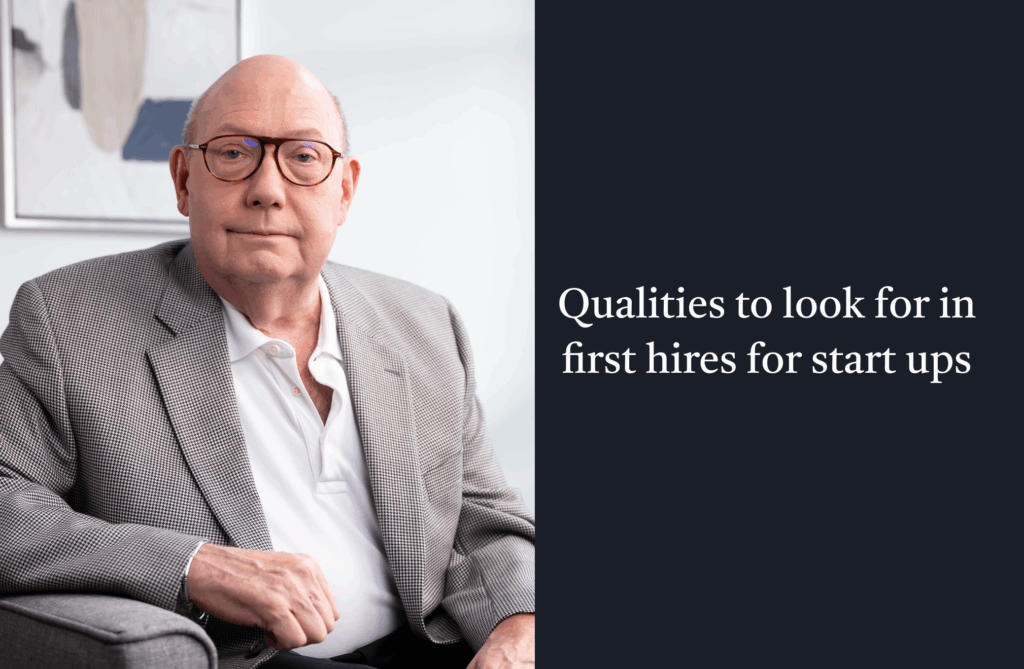
When starting a company, first hires will determine its direction as much as a business plan will. In those early days, you often don’t have the luxury of systems or bureaucracy; you have people. And the people you choose will either build momentum or slow it down. I tend to look for individuals who can operate independently, think critically and stay productive. Startups are by nature unstructured and unpredictable, so if a new hire needs a clear roadmap every day, both you and they will struggle. The right people will take the initiative to help you build the path forward. Of course, that independence has to be balanced with intelligence, resilience, and adaptability when things don’t go as planned. Because in a startup, they rarely do.
The best first hires thrive in uncertainty and see it not as chaos, but as opportunity.
Independence before instruction
One of the most important qualities I look for in early hires is independence. In a startup, there isn’t time to micromanage or hand-hold. Everyone is building as they go, and much of what needs to be done doesn’t exist yet, it has to be created. That requires people who are comfortable working without constant direction and who can make decisions on their own.
Early-stage employees have to be self-starters. They need to see a problem, define it, and move toward a solution without waiting for permission. I’ve always valued people who take ownership of their work and find energy in autonomy. In my experience, those who can only operate inside a clear structure or depend on established systems struggle in the startup environment. Independence is about taking initiative, contributing ideas and challenging assumptions to lay the best possible foundation.
Thriving in uncertainty
Uncertainty is part of every startup. There are no guarantees, no fixed processes, and often no clear roadmap. Some people find that kind of environment uncomfortable, but for the right person, it is energizing. I look for people who can move forward with limited information, make thoughtful decisions, and adapt quickly when plans change.
The early stages of a company are defined by volatility and constant learning. The best hires are those who can remain steady through that process, who see change as an opportunity rather than a threat. They understand that progress often comes through trial and error, and they stay focused on solving problems instead of waiting for conditions to become perfect. That mindset is what allows a startup to keep moving when others would stall.
The three metrics: Personality, intelligence and experience
When I evaluate early hires, I mainly look closely at three things: personality, intelligence and experience. Each matters, and any one of them can be a disqualifier. You can teach skills, but you cannot easily teach mindset or adaptability.
Personality comes first. I want people who are naturally driven, who show initiative and can stay motivated without structure. They should be comfortable making decisions and learning through action. Intelligence is equally important, and not just in the academic sense, but in how someone thinks, analyzes, and reacts to new challenges. Startups move quickly, and the ability to learn fast often matters more than what someone already knows.
Experience is valuable, but only when it complements the other two traits. Too much reliance on past habits can create rigidity. The best people bring useful knowledge but remain open to new ways of thinking. When personality, intelligence and experience align, you have someone who can help shape the company, not just work for it.
Find more reflections on entrepreneurship, business and other passions of mine on my YouTube and social media channels.