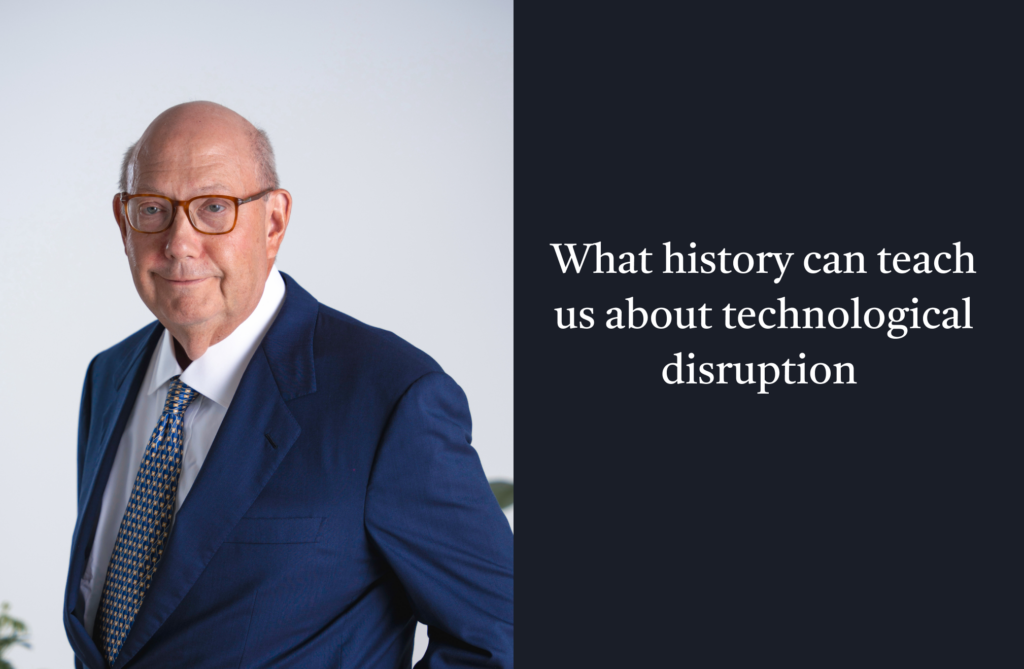
There exists a recurring spell of anxiety that seems to affect every generation. It arrived with the telegraph, the assembly line and the personal computer, and now it has arrived with artificial intelligence. Each time, it repeats the same mantra that this time is different. Today, AI is at the centre of a debate that at once feels new and familiar. Depending on whom you ask, it will either usher in an era of unprecedented human flourishing or eliminate millions of jobs by lunchtime. However, history, that patient and under-consulted teacher, offers a more balanced perspective. If you trace back to previous breakthroughs, from the steam engine to the internet, technology has changed how work is done, rendering certain roles obsolete. But often before the economic obituaries have even been written, it creates entire categories of opportunity that nobody had thought to imagine.
The question is not whether technology will disrupt society. It always does. The question is what we choose to do once disruption begins.
The Industrial Revolution
The arrival of steam power and industrial machinery was met with neither calm nor irrationality. Workers who had spent their lives mastering a craft watched machines replicate in hours what had once taken days. The Luddites (whose name has since become shorthand for technophobia, perhaps unfairly) were not simply afraid of progress, but of the unknown. They were afraid of poverty. And, in the short term, some of those fears were well-founded. However, if we zoom out, a different picture emerges.
The Industrial Revolution didn’t just mechanize existing roles; it created entirely new types of work. Manufacturing, logistics, engineering and industrial finance became new professions for a new world. In retrospect, the lesson feels somewhat obvious: technological progress doesn’t remove work altogether, rather it changes where human effort creates value. The loom didn’t eliminate employment, it eliminated that type of employment and opened the door to new opportunities.
A pattern so consistent it could be law
Every major technological leap of the past two centuries has followed the same basic pattern. For example, railways destroyed the canal and stagecoach industries while creating jobs for engineers, conductors and telegraph operators. Similarly, the advent of electricity rendered gas lighting obsolete, spawning the modern utility sector and consumer electronics. The automobile rendered horse-related industries redundant (blacksmiths and livery stables can only lament what might have been) while generating a new world of manufacturing, road construction, and suburban development.
Computers automated clerical work while creating the fields of software engineering and data analysis. The internet has disrupted retail, media and communication, and has made it possible for someone in rural Wisconsin to run a business that can compete on a global scale.
In each case, people focused on the disappearing jobs because they were visible and immediate. What was harder to see were the new industries quietly emerging from the wreckage at the same time.
Will AI be different?
AI is, in certain genuine respects, a departure from what we’ve seen before. Unlike most previous technologies, which automated physical tasks, AI can engage with knowledge work, reading, writing, analyzing and reasoning. The range of professions it might touch is broader than almost any previous technology. Intellectual honesty requires acknowledging that the adjustment may be genuinely painful for people whose work sits squarely in its path.
But we can still take some lessons from history. New technologies have consistently proved better at amplifying human capability than replacing human judgment outright. The calculator did not replace the mathematician, it freed her from arithmetic and let her do mathematics. If that pattern holds, AI will transition the premium onto things it cannot easily replicate: asking better questions, exercising judgment under uncertainty, bringing ethical reasoning and lived experience to complex decisions.
Mechanisms change and anxiety is human nature. But history suggests that the most important factor has never been the technology itself, but rather the human capacity to adapt to it. That capacity has been underestimated before, and has come through. The honest bet, based on the evidence history has actually provided, is that it will again.
Find more reflections on entrepreneurship, business, AI and other interests of mine on my YouTube and social media channels.